Scars are a normal part of healing, but sometimes they’re more noticeable than we’d like. Scars often heal lighter than the surrounding skin, the texture feels different, and it catches your eye every time you look in the mirror. That’s where scar revision and SkinTone Camouflage can help. By improving the texture and reducing contrast, areas of reduced pigmentation can blend naturally with the surrounding skin.
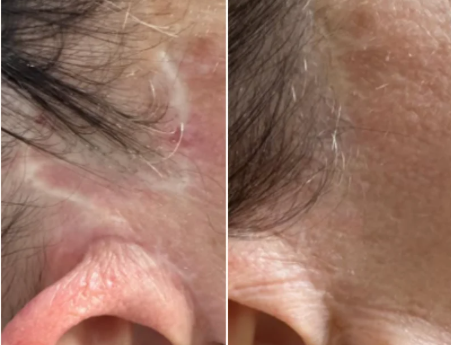
So, what exactly is Scar/Skintone Camouflage?
Scar camouflage is a paramedical tattoo technique that uses customized skin-tone pigments to soften the contrast between a lighter scar and the surrounding skin. Think blend, not cover-up. Because skin has depth, variation, and different undertones, the pigment has to be customized to the area being treated, and the way the skin heals. The goal is for the treated area to feel more connected to the skin around it.
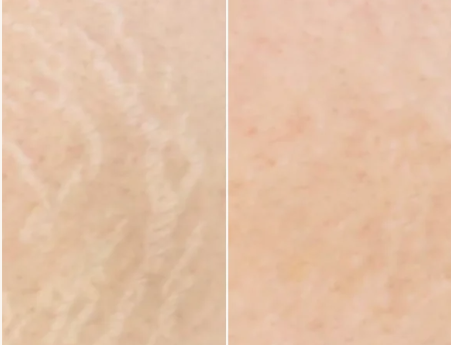
Support the skin first
Not every scar or stretch mark is ready for camouflage. When the skin is textured, tight, raised, or uneven, Inkless Revision is often the first step. Using precision needling, this treatment supports the skin’s natural remodeling process to help soften and refine the appearance of mature scars and stretch marks. Once the area is healed, we can reassess any remaining color contrast and determine whether SkinTone Camouflage could further improve the appearance.
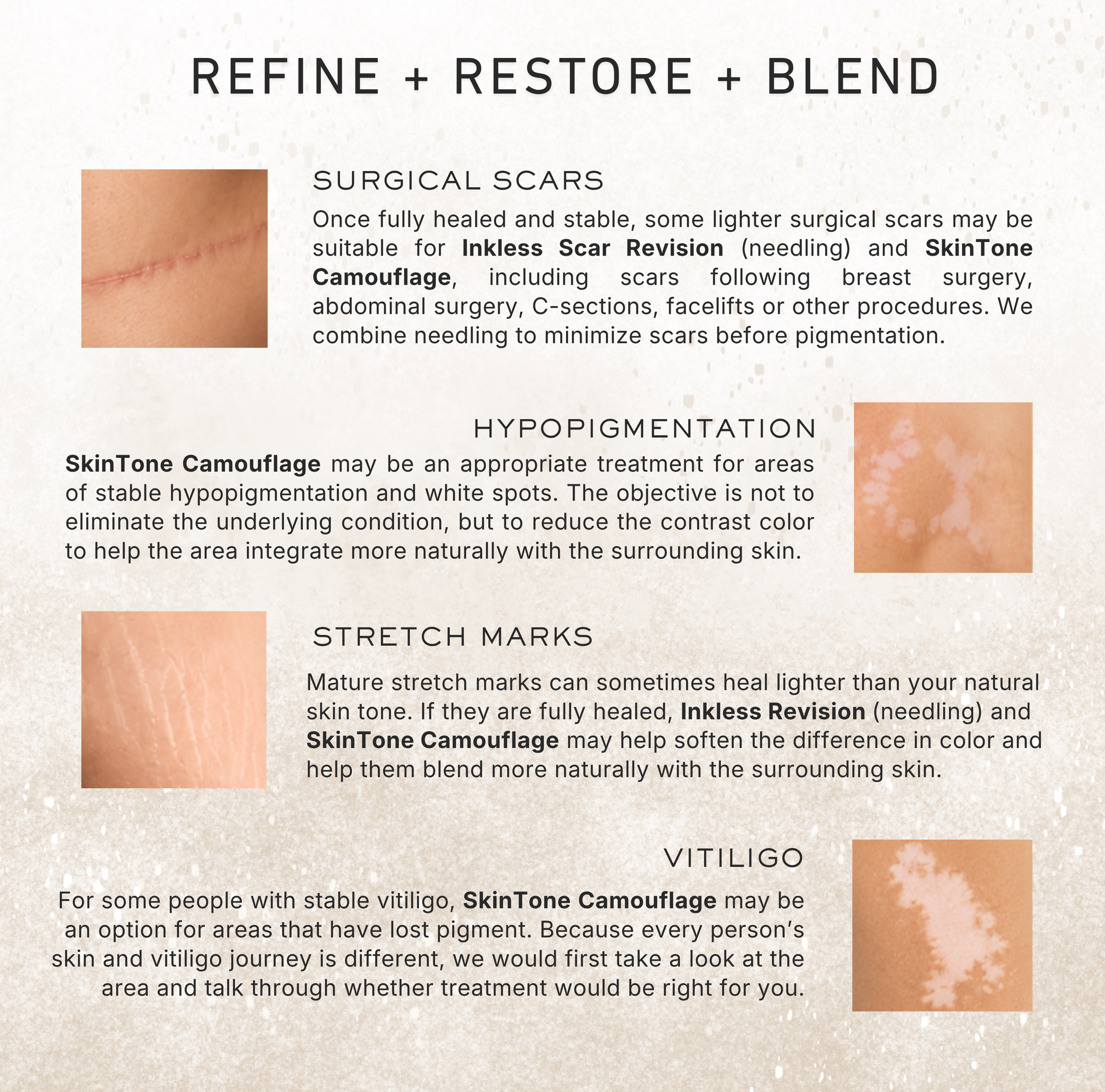
Will it completely hide my scar and areas of hypopigmentation?
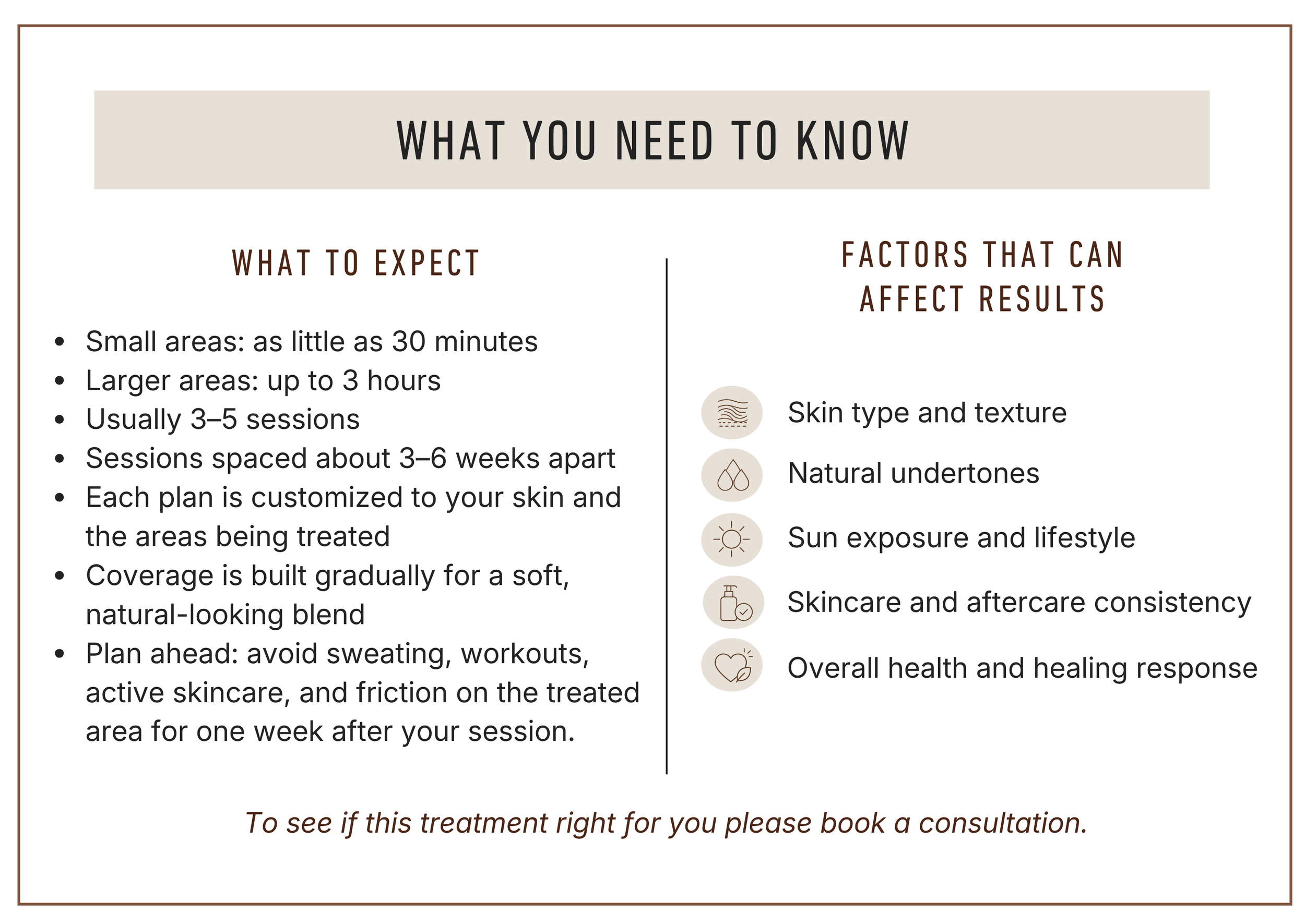
Scar camouflage is designed to make a scar less noticeable, not necessarily invisible. By reducing the color contrast between the scar and surrounding skin, it can help create seamless appearance. Results vary depending on the type and texture of the scar, skin tone and undertones, aftercare, and your individual healing response. Often, the best part is simply that your eye is no longer immediately drawn to the scar, allowing it to blend more naturally into the surrounding skin.
You don’t need to know whether you need Inkless Scar Revision or SkinTone Camouflage before coming in. A consultation is the easiest place to start. From there, we can look at the scar, the texture, the color, and then recommend the treatment approach that best suits the area and your goals.